Religious/ Spiritual

Kalkaji Temple

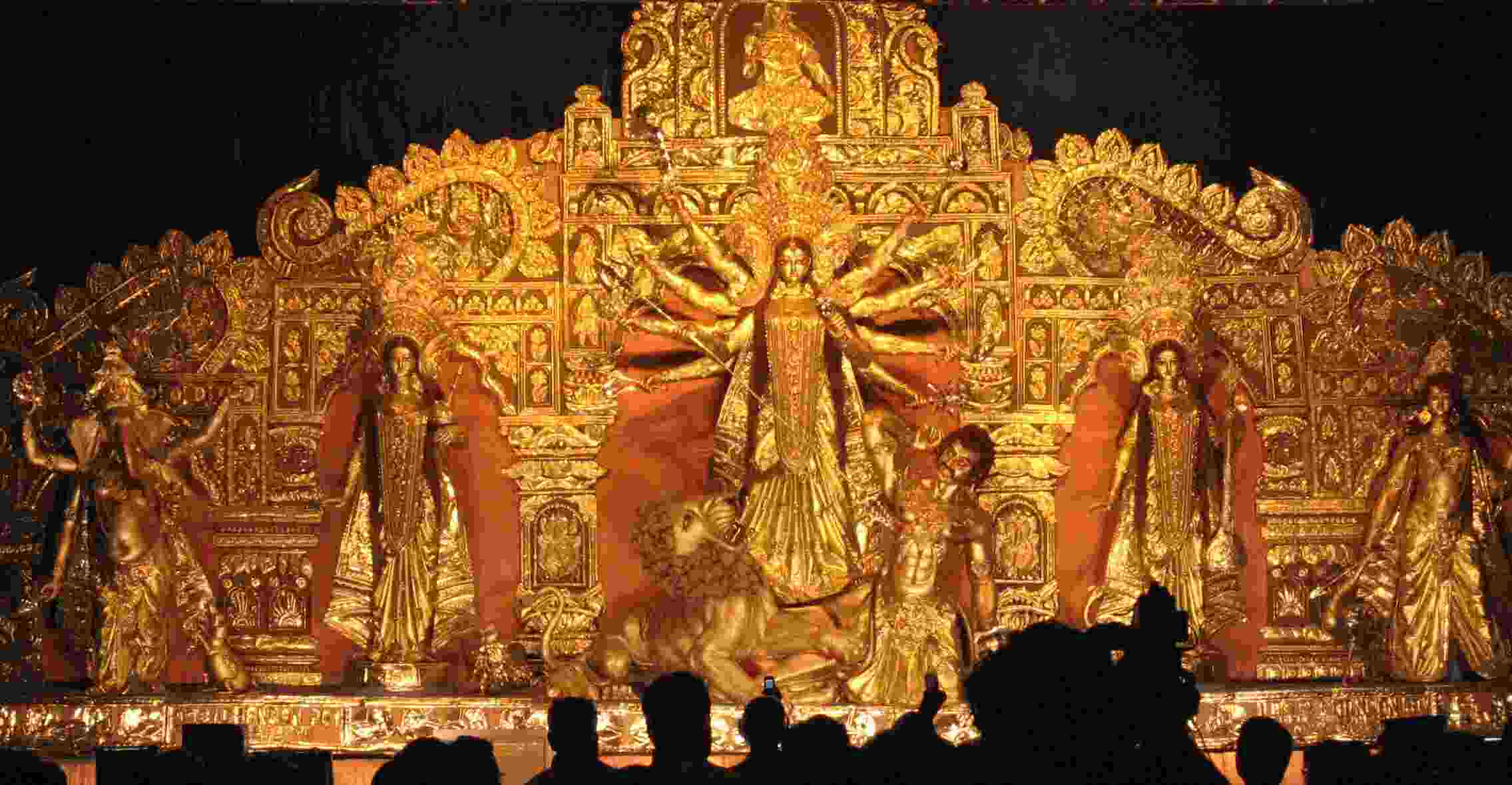
Kalkaji Temple is situated beyond the commercial complex of Nehru Place in South Delhi. This domed twelve-sided temple is devoted to Goddess Kalka Devi, a reincarnation of Goddess Durga. The oldest section of the Kalka Ji Mandir dates back to the year 1734. It is said that the Maratha rulers looted the temple in the year 1738, after they were defeated by the Mughals in the battle of Talkatora. Somewhere in the mid-19th century, certain changes and additions were carried out on Kalkaji temple by Raja Kedarnath, the treasurer of Emperor Akbar. However most of the building is modern. Thousands of pilgrims throng the temple, especially in October during the nine days of navratrey, when a huge fair is held here.Kalkaji Temple stands on a hill.

Location: 
Just opposite to the Bahai House of Worship (Lotus Temple), East of Nehru Place in South Delhi

Baba Balakrupi Temple

This beautiful temple is situated in Balakrupi village which was renamed after this temple. An annual fair is held here at nearby temple ground at every Saturday of a particular month.. It also packs a beautiful picnic spot called as Thara which seems like a small plateau. On the right hand side of this place is Gugli Khadd where people enjoy swimming. Balakrupi is 2 km from Jogindernagar. In Balakrupi temple a special tradition of cutting down the hair of 2 and half year old child known as ‘Mundan Sanskar’is done.

Mayawati Ashram

Close to Abbott Mount is a popular spiritual place called Mayawati Ashram or Advaita Ashram. Swami Vivekanad, a spiritual guru had shifted the publication office of his Prabuddh Magazine from Chennai (then Madras) to Abbott Mount.

The Ashram provides for tourist lodging and boarding facilities and even has a small library and museum.

Rudra Mahalaya

The ancient texts describe Rudra Mahalaya as a magnificent Shiva Temple with a three-storeyed 'shikhara', 1600 pillars, 12 entrance doors, central 'mandapa' and porches on east, north and south and sanctum in west. Around the temple, there were 11 shrines of Rudra.

The eastern gate was adorned with beautifully carved 'Toran', with a flight of steps leading to the Saraswati river. Ulugh Khan and Ahmed Shah of Ahmedabad ruthlessly destroyed this magnificent Shiva Temple, in the late 13th century or early 14th century. The cells on the surrounding walls were converted in to a mosque.

Sankat Mochan temple

Sankat Mochan temple is one of the sacred temples of Varanasi. It is located in the southern part of Varanasi, near the Banaras Hindu University. It is dedicated to the Hindu God, Hanuman. The word "Sankat Mochan" means one who helps in removing sufferings i. e. Lord Hanuman. Tulsidas, the author of the famous Hindu epic Ramacharitamanasa, founded the Sankat Mochan temple. According to Hindu mythology, one who visits the Sankat Mochan temple regularly, his wishes get fulfilled.

Varanasi Ghats

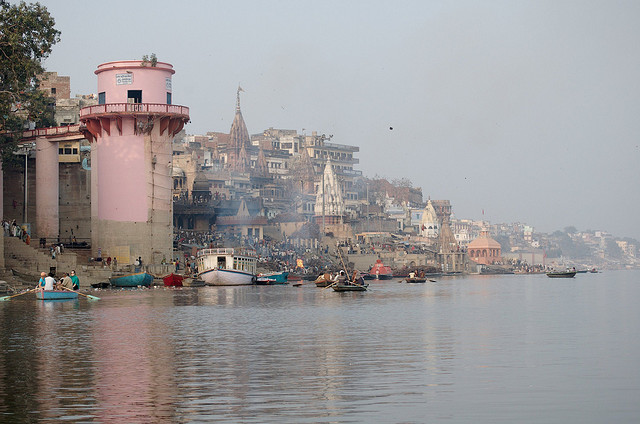
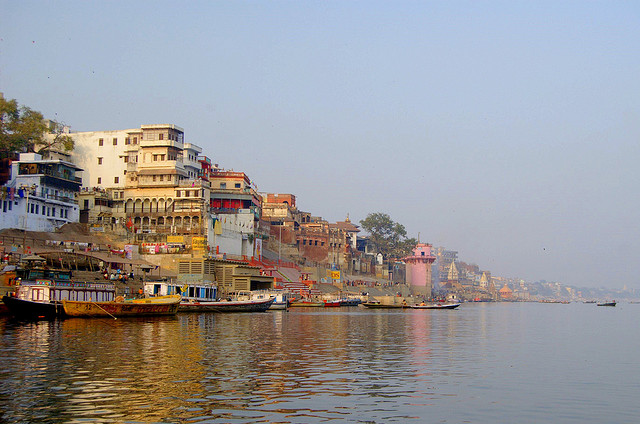
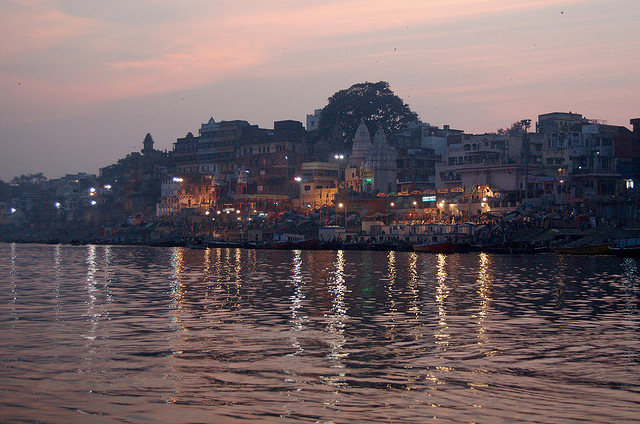
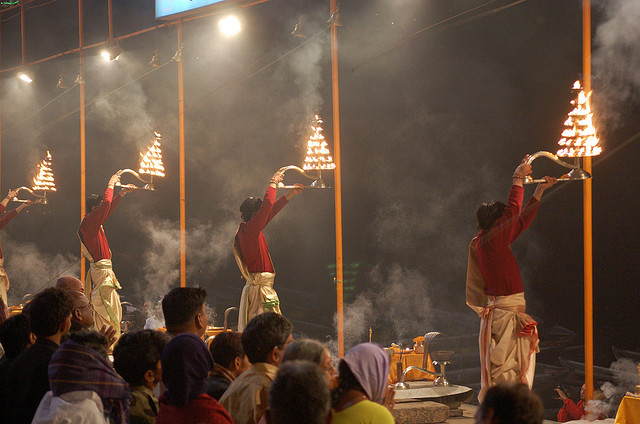
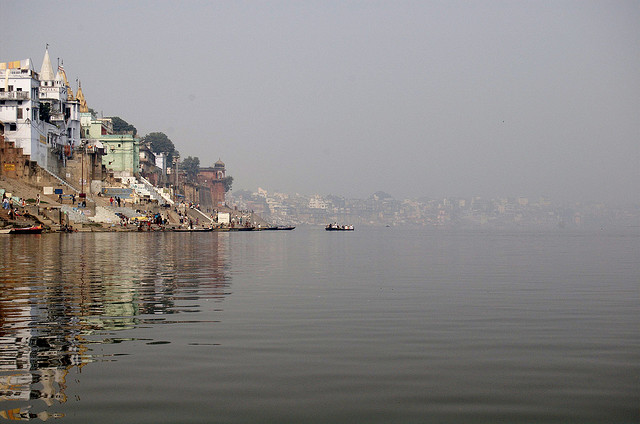
Varanasi has nearly 100 ghats, steps leading to the banks of River Ganges. Many of the ghats were built when the city was under Maratha control. Marathas, Shindes (Scindias), Holkars, Bhonsles, and Peshwes (Peshwas) stand out as patrons of present-day Varanasi. Most of the ghats are bathing ghats, while others are used as cremation sites. Many ghats are associated with legends or mythologies while many ghats are privately owned. The former Kashi Naresh owns Shivala or Kali ghat. Morning boat ride on the Ganges across the ghats is a popular visitors attraction.

http://www.flickr.com/photos/ampersandyslexia/3620373723/in/photostream
http://www.flickr.com/photos/ampersandyslexia/3620373029/in/photostream
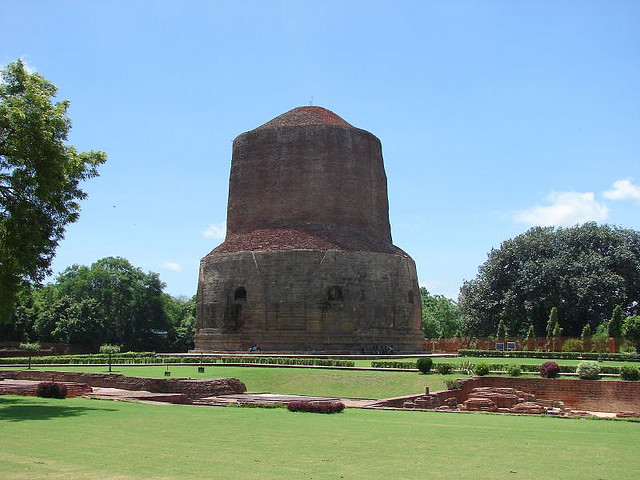
http://www.flickr.com/photos/ampersandyslexia/3621207594/in/photostream

Nila Gumbaj Ki Masjid

Nila Gumbaj Ki Masjid is constructed on a high platform, with a central hanging kalash in the prayer hall and a central fluted dome. It is an old architectural landmark, situated in the Panchmahal District of Gujarat. This old mosque is located in the north-eastern part of Champaner city.

The mosque derives its name from the coloured central dome. There are three main mehrabs of the prayer hall in this mosque that are embellished with floral motifs. In addition to this, the mosque has three entrances on the east, north and south directions. There is also a rectangular tank for ablutions in the north-eastern corner of the premises.

Nagina Masjid

Nagina Masjid was built during the 15th century and is located in Champaner. It has a white gateway, which resembles an arcade with columns on either side of a square under the central dome.

This mosque was built using pure white stones and showcases a unique blend of Gujarati-Islamic architectural style. Nagina Masjid is also popularly known as the Jewel Mosque, because it has a beautifully decorated mausoleum with ornaments.

The mosque can be reached by bus, taxi or train from Vadodara and Ahmedabad.

Maa Mahakalika Temple

Maa Mahakalika Temple is both a Hindu and Muslim pilgrimage spot and is located at the top of Pavagadh Hills. This temple is situated amidst dense forests, on a cliff and is considered to be one of the 51 Shakti Peeths. The main deity in this temple is Goddess Kalika, who is believed to be the incarnation of Goddess Kali.

The Kalika Temple is located at a height of around 550 m above ground level and can be reached by using the ropeway. Apart from the ropeway, there are around 250 steps which lead to this temple.

This temple is further divided into two parts, with the top part featuring a Mazar of a Peer, which is sacred for Muslims. The Mazar is called as Sadanshah Peer Dargah, where visitors can listen to several tales, dramas and songs regarding Patai Raval.